Get to Know Your Eight-Legged Neighbors

If you’ve noticed a big, colorful spider outside lately, you may have wondered whether it’s a Joro spider. With this invasive species spreading through parts of North Carolina, we’re hearing that question more and more often. But many suspected Joros turn out to be native spiders that have been here all along.

Knowing the difference is a good reason to take a closer look. And we have a new publication to help! Check out Spiders of North Carolina, a new NC State Extension publication that features our eight-legged neighbors.
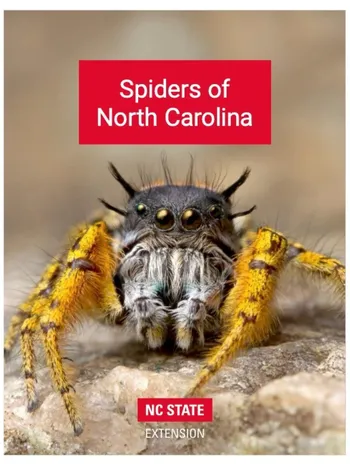
Publication cover. Photo of a jumping spider. Words read, "Spiders of North Carolina. NC State Extension."

Regan Daniels, Dr. Matt Bertone, Dr. Chris Hayes, and Dr. Kelly Oten put this resource together to help people get to know the spiders around them. It covers commonly encountered spider families, their role in our ecosystems, and guidance on management (when it’s needed).

It’s important to remember -- even with the fear they instill in many people, spiders are highly beneficial! They eat insects, including pests that damage plants or nuisance pests that invade our homes. Spiders also become food for birds and other wildlife, making up an important part of the food web and a healthy ecosystem. Encountering them may not be the most fun if you catch a face full of webs while hiking, but their role is not one that can be replaced.

Joro spiders may have made our encounters with spiders a little more complicated. First detected in western North Carolina in 2021, these introduced spiders are quickly expanding their range.

Researchers are still studying how they affect native species and local ecosystems. While their size can be startling, Joros are generally considered shy and aren’t considered dangerous to people.

So, is it a Joro? How can you tell what spider you’ve found?

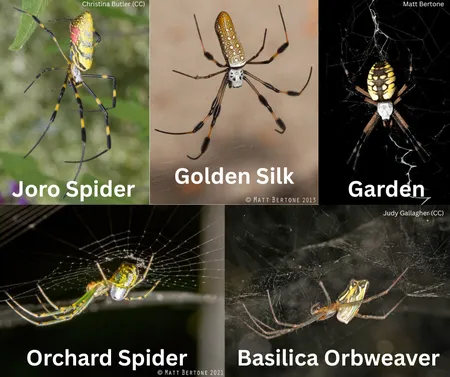
There are several native species that look similar, so we need to look beyond size and color. Our native black and yellow garden spider (also known as a writing spider) is large and boldly marked, too. You may recognize the thick zigzag of white silk it often adds to its web. The native golden silk spider, a close relative of the Joro, has a spotted abdomen and distinctive tufts of hair on its legs. Even small, silvery-green orchard spiders sometimes get mistaken for young Joros. A photograph and a careful comparison of features can help you sort them out.

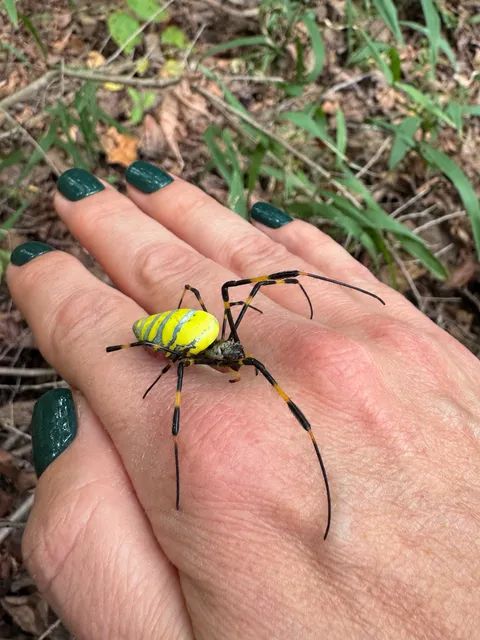
Female joro spider walks on hand of researcher.
In the top left corner is a female Joro spider. In the top center is a female golden silk spider. In the top right corner is a female black and yellow garden spider. In the bottom left is an orchard spider. In the bottom right is a Basilica orbweaver.

Getting the identification right matters. We don’t want concern about Joro spiders to lead people to kill native spiders unnecessarily. For most spiders outdoors, leaving them alone is the best approach. Routine spraying is generally unnecessary and can also kill other beneficial predators that help keep garden pests in check.

So, the next time an eight-legged friend catches your attention, pull up Spiders of North Carolina. You might discover that the spider you’ve been worrying about is a helpful native species, one that’s worth keeping around.