- 2,080-acre block near the Lamsburg community in Surry County (as early as June 3)
- 1,760-acre block around Mount Mitchell in both Yancey and Buncombe counties (as early as June 14)
- 2,845-acre block near the Celo community in Yancey County (as early as June 14)
- 1,330-acre block near Marion in McDowell County (as early as June 14)
Treatments for the Invasive L. dispar Begin in Western NC
(Updated: July 12, 2021, 6:05 a.m.)
This month, the N.C. Department of Agriculture and Consumer Services is beginning treatments for Lymantria dispar (formerly known as 'gypsy moth') at sites within Surry, Buncombe, Yancey, and McDowell Counties. The four areas targeted for treatment include:

In addition to these four sites, in mid-April, a treatment was conducted in Buxton (Dare County) that targeted caterpillars.
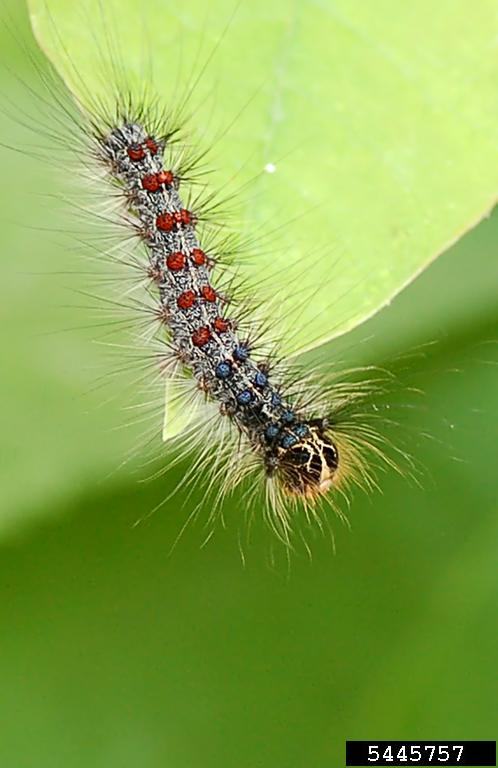
L. dispar is a non-native invasive insect that feeds on the leaves of over 300 different species of trees and shrubs, predominantly oaks and other hardwoods. Heavily infested trees may be completely defoliated, leaving yard trees and entire forests more susceptible to attacks from other pests. Severe infestations that occur year after year often lead to tree death. These caterpillars can also pose public health concerns for people with respiratory problems. In areas with high-density L. dispar populations, the caterpillar hairs and droppings may cause severe allergic reactions.
Native to Europe, L. dispar was introduced near Boston, MA in the 1860s and has been a problem in eastern hardwood forests since. NCDA&CS has addressed spot introductions of the moth across North Carolina since the 1970s.
For more information, or to request treatment notification via text or email, visit the NCDA&CS website or contact NCDA&CS toll-free at 800-206-9333. Updates, including spray start dates, will also be posted on Twitter at @NCAgriculture.
Subscribe for Email Updates
Receive periodic email updates on topics you care about.
SUBSCRIBE
Written By