A new invasive insect has been spotted in North Carolina. In August 2022, the elm zigzag sawfly (Argidae: Aproceros leucopoda) was found in North Carolina for the first time. In North America, it has previously been found
in Québec (detected in 2020) and Virginia (detected in 2021). Native to Asia, elm zigzag sawfly larvae feed exclusively on elm (Ulmus spp.) and can cause severe defoliation.
Elm Zigzag Sawfly Found in NC for the First Time
(Updated: Sept. 8, 2022, 10:39 a.m.)
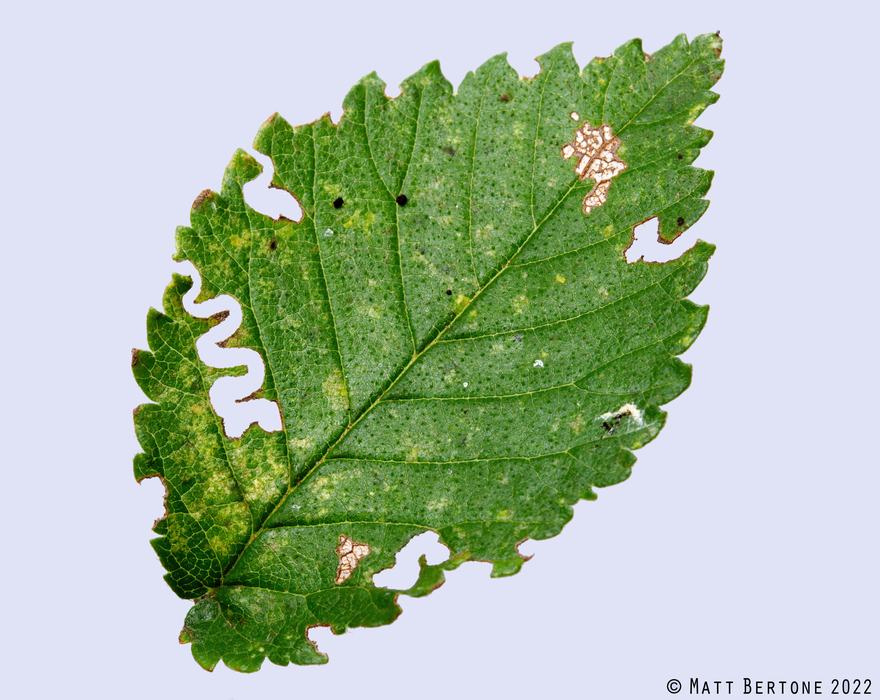
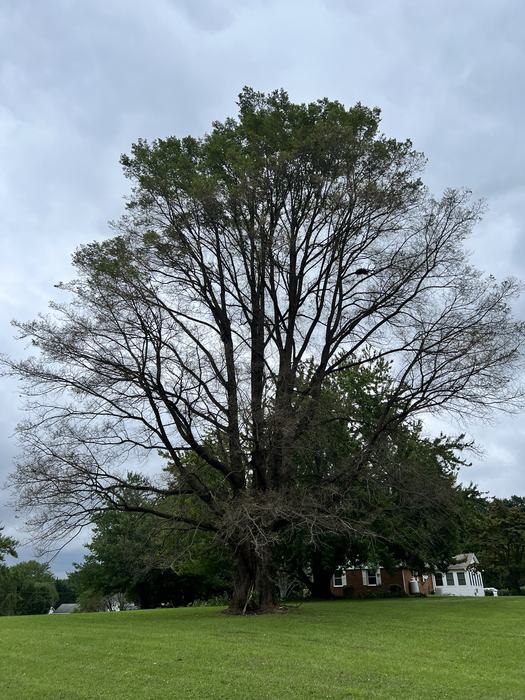
A homeowner near the Stokes and Surry County line reported heavy defoliation of several American elm (U. americana) trees on their property. Elizabeth Edwards, NC Forest Service Assistant County Ranger in Surry County, visited the site and saw small green insects feeding on foliage, some creating the characteristic zigzag pattern damage in the leaves. She suspected the elm zigzag sawfly as the culprit and reported it to forest health specialists. On August 16, Brian Heath and Chris Cooper (NC Forest Service) and Kelly Oten (NC State University) visited the site and confirmed the identification. The infestation is localized, straddling Stokes and Surry Counties. Both American elm and winged elm (U. alata) were impacted.
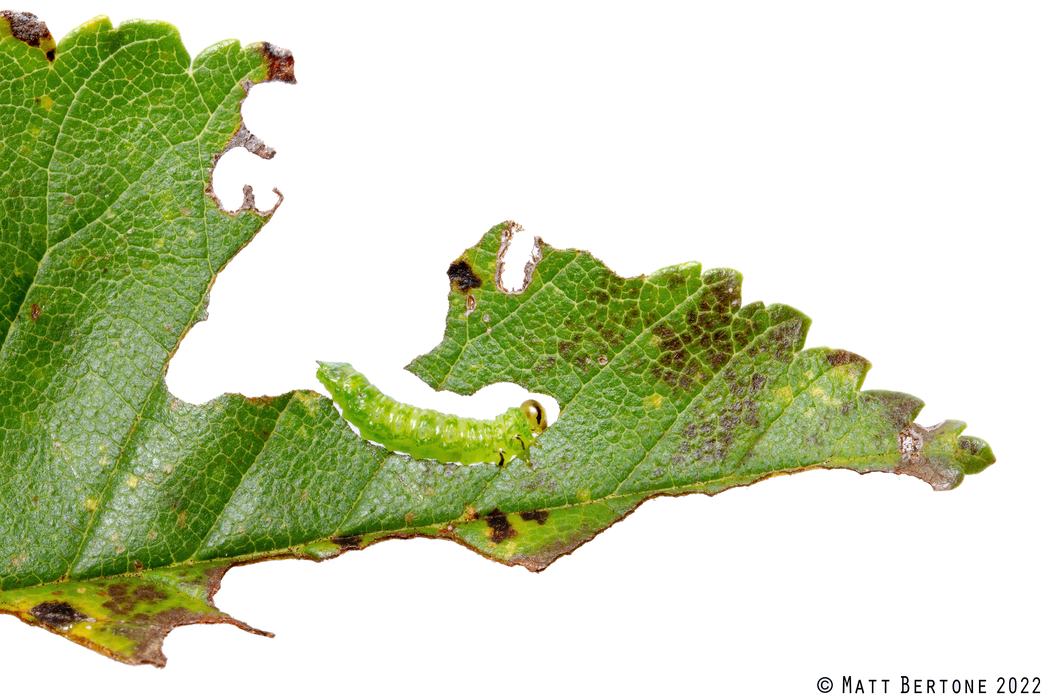
There are many unknowns when a new invasive insect is detected in a new area. In other regions, multiple generations of elm zigzag sawfly occur per year, so feeding larvae will likely be present throughout the growing season. The young larvae create the characteristic (and namesake) zigzag pattern in leaves, while older larvae feed more broadly, leaving behind only thick leaf veins. The elm zigzag sawfly reproduces parthenogenetically, which means females reproduce without mating. In fact, no males of this species have ever been observed!
The elm zigzag sawfly is a strong flier and will likely continue to spread. On its own, it can spread up to 28-56 miles in one year. Other reasons for rapid population growth are that they can have multiple generations per year and they no burden of finding a mate. Moreover, they can hitchhike on plants or in soil or as cocoons attached to various objects.
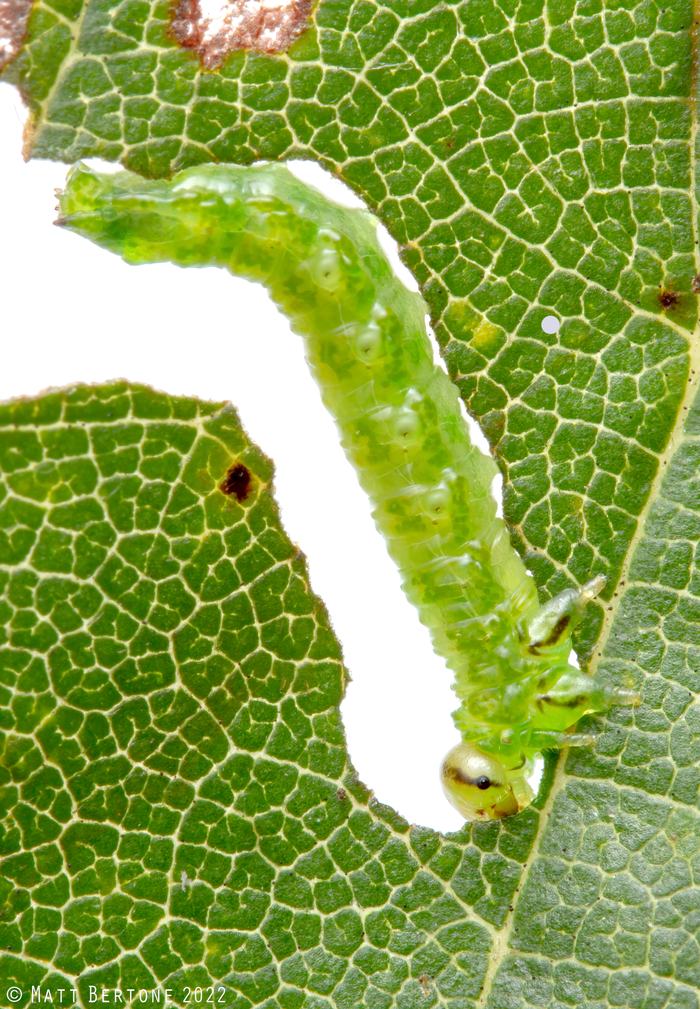
Keep a look out! Report suspected elm zigzag sawfly infestations to your local county Extension office or NC Forest Service county ranger. NC State Extension is maintaining a database of positive finds in NC (email Kelly Oten, kelly_oten@ncsu.edu).
It must be the year of the invasives: This detection closely follows the first detection of the invasive spotted lanternfly in NC in June 2022. If bad news comes in threes, then keep your eyes peeled for more non-native pests!
Subscribe for Email Updates
Receive periodic email updates on topics you care about.
SUBSCRIBE
Written By

Contributors