By: Elliot Nauert and Jennifer Fawcett, NC State Extension Associates
Wildfire Resources in North Carolina
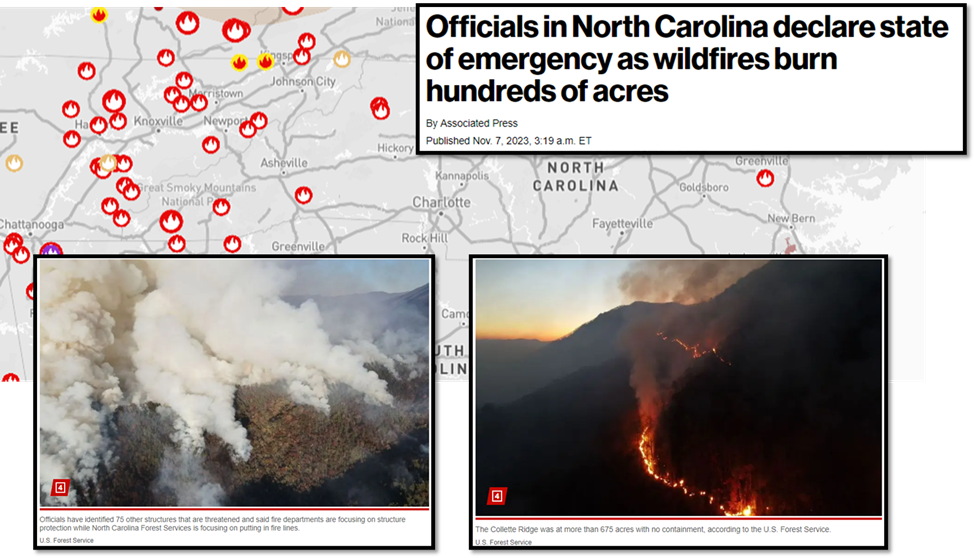
At the time of publishing this post on November 21, 2023, North Carolina is finally receiving some much-needed rain to end a dry spell that had the unfortunate timing to coincide with the seasonal leaf fall in the mountains. Those dry leaves acted as fuel for wildfires and over the past few weeks wildfires have burned thousands of acres in the mountains like the Poplar Drive Fire which destroyed multiple homes in Henderson County, and the Collett Ridge Fire which has burned over 5,500 acres. The high fire activity and high fire risk prompted burn bans, public land closures, and a declaration of a state of emergency by state officials (Figure 1).
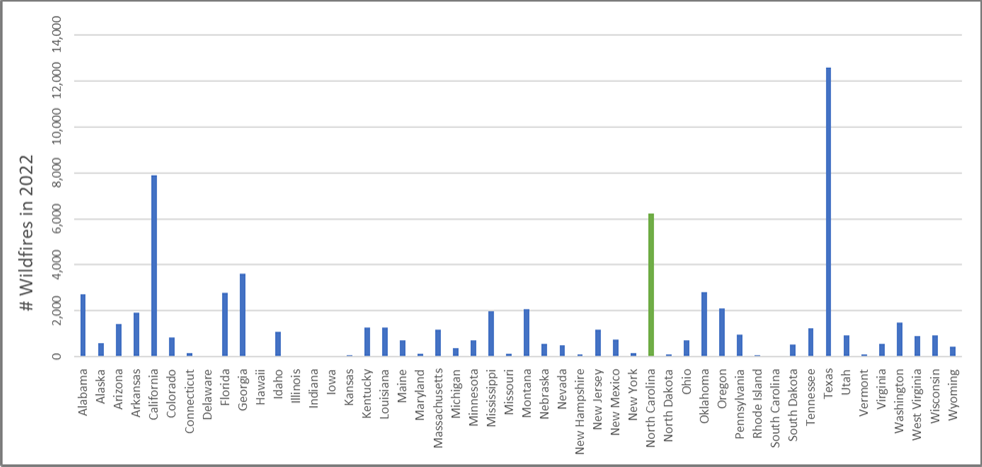
Although the current rain will be an enormous boost to efforts to control these fires and will greatly reduce near-term fire risk, we should use this moment as a reminder to make sure we are prepared for the next time we face dangerous wildfire conditions. It’s often surprising for many folks to hear that North Carolina experiences some of the greatest number of wildfires in the country as compared to other states (Figure 2). Coupled with the fact that we also have the most wildland urban interface in the country (resistwildfirenc.org), wildfire risk is an important issue for our state.
There are many resources available regarding wildfire in our state that can help you keep informed of current wildfire conditions, learn about wildfire, and take action to reduce your wildfire risk. These include, but are not limited to, the following:- The North Carolina Forest Service is one of the main authorities for wildfire suppression in the state. Their Fire Control and Prevention page provides links to resources related to fire in North Carolina. There you can find information about how the NC Forest Service manages wildfires, current wildfire activity in the state, how to stay safe in the face of wildfires, and prescribed fire.
- When there are wildfires in your area, you can keep track of them with this interactive map of reported wildfires across the state. It provides information on the wildfire size, location, percent contained, and more.
- Knowing the wildfire danger rating can help you decide what actions you need to take to prevent and prepare for wildfires in your area. This map allows you to monitor the Current Wildfire Danger Rating in your area.
- Many of us live in the wildland urban interface, where fires that burn in the wildland can spread into our communities and impact our homes. Resist Wildfire NC has resources to learn the actions you can take to reduce wildfire risk around your home. You can also check out the FireWise USA® program for educational resources and tips for keeping your home, neighborhood, and family safe from fire.
- You can reduce your home’s wildfire risk by landscaping with fire resistant plants and materials so that an encroaching fire is less likely to spread to your house. NC State Extension has a great publication about Fire Resistant Landscaping in North Carolina.
- Ready NC lists important actions to take before, during, and after a wildfire affects your area.
- Even if your home isn’t within reach of the flames, wildfire smoke can still threaten your health from long distances. You can monitor the air quality impacts from smoke in your area using the AirNow Fire and Smoke Map. It provides information like current air quality for your location, the locations of fires and smoke plumes, smoke forecasts, and recommended actions to take to protect yourself from smoke. These recommendations were developed by EPA scientists who are experts in air quality and health.
Subscribe for Email Updates
Receive periodic email updates on topics you care about.
SUBSCRIBE
Written By