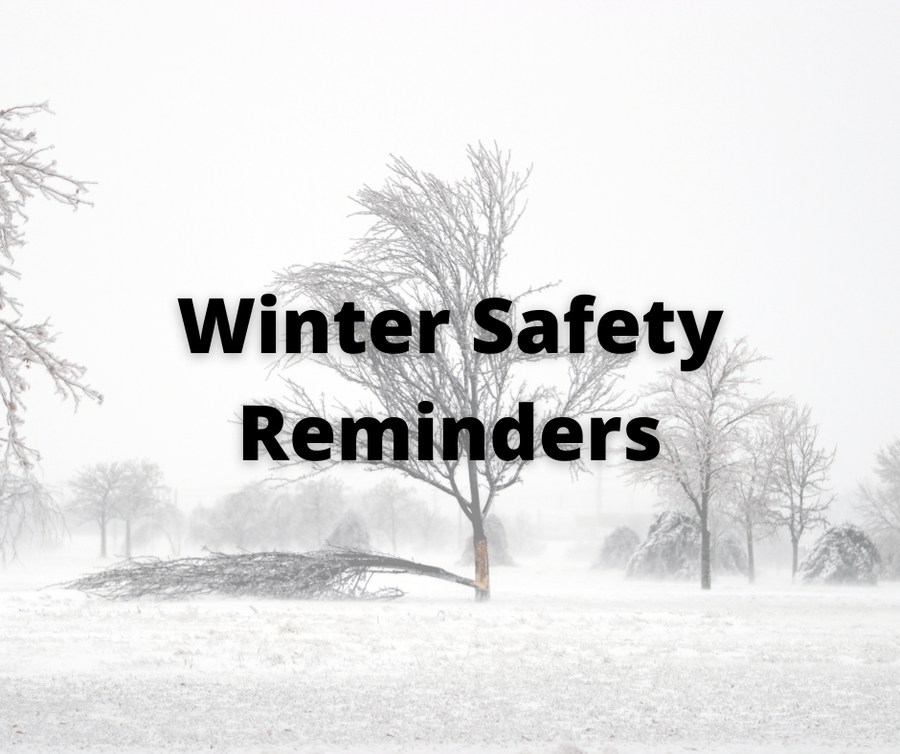
Winter storms, ice, and freezing rain can impact healthy trees and forested areas, damaging or downing trees. Before, during, and after the storm, remember, safety is primary.
The NC Forest Service has recommendations to assist property owners in preparing for or cleaning up after winter events. Recommendations include:
Before the Storm- Prevention is key. Properly pruned trees with strong branch attachments will hold up better in an ice storm.
- Prune branches with weak attachments, co-dominant trunks and other defects. Hire a qualified arborist to ensure trees are pruned properly. Look for tree service companies with a certified arborist on staff and/or Tree Care Industry Association (TCIA) accreditation.
- Do not top your tree. Topped trees will quickly regrow new branches which are weakly attached and more likely to break during storms.
During the Storm
- Safety first! Stay indoors in a safe place. Your safety is most important.
- Do not attempt to knock ice or snow from branches. This will likely cause the branch to break, possibly injuring you. Branches are designed to bend and stretch. Quick shocks or instant bends will cause them to break more easily rather than bending slowly.
- Do not spray water on a tree, attempting to melt ice or snow, as it will likely add more weight to the tree.
- Do not try to prop up bending or sagging limbs.
- Do not touch limbs that may be in contact with power lines.
After the Storm
- Wait until ice or snow has melted before cleaning up.
- Cleaning up downed debris presents many safety risks. First, assess safety conditions of your family, home, and neighborhood. There may be a debris field, making for poor footing. There may be potentially downed power lines. If electrical wires are an issue, do not attempt tree work. Contact your utility company and let them remove the electrical wires.
- Only attempt to clean up minor tree debris.
- Operating a chainsaw on storm-damaged trees is dangerous. Historically, more people are injured by chainsaws than the storm that caused the tree damage. Never operate a chainsaw alone and always use it in accordance with the manufacturer’s instructions. Work only on the ground, and always wear personal protective equipment such as a hard hat, a full-face shield or safety goggles, and hearing protection. Be aware of cutting any branches under tension or pressure. See these tips for operating a chainsaw safely.
- Avoid leaving broken limbs on your tree. All broken or torn parts of the tree should be properly pruned. A proper pruning cut will promote sealing off the wound and reduce further threat of decay or excessive sprouting.
- Hire an arborist with experience in storm restoration pruning.
- Consider hiring an arborist with Tree Risk Assessment Qualification (TRAQ) to fully evaluate the condition of your tree(s) after a damaging storm.
Visit the NCFS website for more on their recommendations.
You can also find further information on winter safety by taking a look at NC State Extension's disaster preparedness publications.